

How to publish
SCOPE
ARTICLE TYPES
FORMATTING MANUSCRIPTS
SUBMISSION
EDITORIAL AND REVIEW PIPELINE
AIMS
COSTS (no APC)
SCOPE:
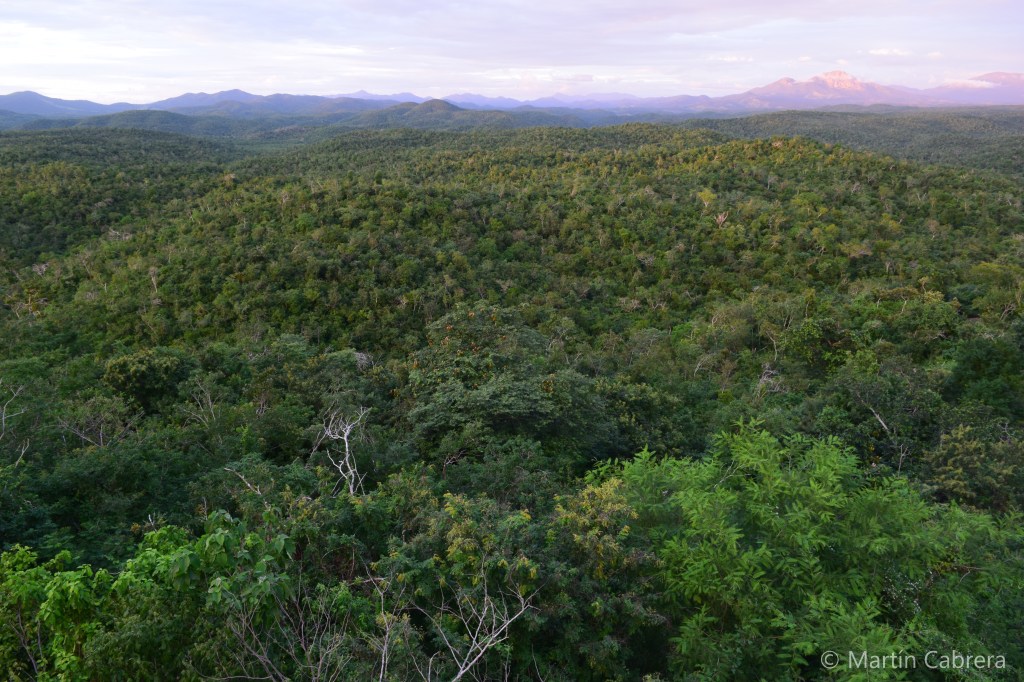
Biogeography welcomes all research relevant to the discipline, including but not limited to: community ecology, conservation biogeography, functional biogeography, island biogeography, landscape ecology, macroecology, paleobiogeography, phylogenetic (historical) biogeography, population genetics and geogenomics, & statistical biogeography.
To submit to the journal:
https://biog.journals.sup.org/index.php/biog/about/submissions
ARTICLE TYPES:
– Original research: A typical original research article has the standard IMRaD structure of the scientific literature. It will present novel datasets (either collected anew or collated from multiple existing sources) and original analyses thereof. Analyses are expected to be detailed and comprehensive, providing a robust description and interpretation of the dataset, contextualized in existing concepts and theory. They advance the field through presentation of robust hypothesis-based descriptive, experimental, or (meta) analytical research and thus examples that corroborate or question components of existing theory.
– Methods: A Methods article describes a purpose and need for a procedural advance, and delivers a tool to achieve that advance. Typically statistical and/or software tools, Methods may also introduce new equipment and novel deployments thereof. A provisional dataset should be included as illustration.
– Letter: A Letter article has a modified I(RD)aM structure. It will present original research and analyses, being concise but still detailed and thorough, providing a robust introduction to an emerging phenomenon that has implications for existing concepts and theory. They advance the field through presentation of particularly novel findings or interpretations that corroborate or question aspects of existing theory in a succinct form.
– Opinion/Perspective: A typical opinion/perspective article has a provocative introduction that may take a position on a consequential topic. It develops a framework for interpreting the existing literature, possibly in contrarian ways, and indicates areas for future work that will refute or support the thesis. Articles may address mainstream ideas, or those that have historically been on the fringe or forgotten. A perspective differs from an opinion in having a more moderate rhetorical style, greater integration of evidence, and evaluation of different viewpoints.
– Review: A typical review article has a motivating introduction that encourages readers to continue reading. It develops a general thesis that frames a comprehensive discussion of the existing literature and indicates areas for future work. Reviews in Biogeography often are meta-analyses or other systematic approaches to synthesis of large datasets and/or findings.
FORMATTING MANUSCRIPTS:
Initial submissions may be in any format as long as they consider the standard sections for modern scientific publications (e.g., IMRaD structure; see also ‘article types’ and ‘brief overview’), including page and line numbering.
Figures and tables may be embedded in the manuscript as best fits the flow of information; key details should be clear. Separate, high resolution, figures will be required after acceptance.
After first editorial recommendation, manuscripts should be reformatted to journal style, see templates {pending) for guidance.
Brief overview of requirements
Original research, Methods, and oftentimes Review article types will usually have each of the sections, in order, as listed below. Letters may re-order the methods section. Opinions and Perspectives will typically have structured arguments that read as an integrated Introduction+Discussion.
Cover page {Title, Authors, Institutional affiliations, running head, keywords}
Abstract
Introduction
Methods
Results
Discussion
Conclusion {optional}
Acknowledgements
References
Other sections:
Author contributions {see CRediT – https://credit.niso.org/}
Conflicts of Interest
Data, code, sample deposition and availability
Funding sources
Animal welfare {if relevant}
Figures {if not embedded in the main text}
Tables {if not embedded in the main text}
Appendix {optional}
Supplementary documentation {optional}
SUBMISSION:
Manuscripts will be submitted and managed using the Open Journal Systems (OJS) workflow at Stanford University Press: https://biog.journals.sup.org/index.php/biog/about/submissions. Pre-submission enquiries can be sent to biogeographyjfab@gmail.com. Please include a short cover letter in the body of the email, consisting of 5 paragraphs: your manuscript’s (1) title, (2) main aims, (3) principle approach/methods, (4) major findings, and (5) implications. If you have a completed manuscript, attach it to the email in PDF, along with confirmation that it is not under consideration at another journal. We have no requirements for formatting or style for Initial enquiries, only that the manuscripts consider the standard sections for modern scientific publications and are original biogeographic work conducted by the authors in accordance with broadly accepted ethical norms for the field.
EDITORIAL AND REVIEW PIPELINE, INCLUDING DECISIONS:
New article submissions will be handled initially by the most relevant Section Editor (SE), who will assess the manuscript for fit with the journal’s scope and disciplinary standards; they will either reject the manuscript or forward it to an Associate Editor with relevant expertise. The AE will again assess the manuscript against disciplinary standards and either recommend rejection or send it for peer review. On receiving reviews, the manuscript and reviews will be assessed by the AE, who will make a detailed recommendation to the SE, who will verify the recommendation and inform the authors of a decision (including reviews, editorial assessments, and guidance for revisions as appropriate.) Decisions will be one of the following: Final reject, Reject with option to resubmit, Major revision, Minor revision, Accept pending, Accept. Manuscripts receiving a decision involving revision will, when submitted, usually follow the same pathway. Accepted manuscripts will be checked by the journal’s Data and Code editor to ensure compliance with DCAS, the Data and Code Availability Standard (https://datacodestandard.org/), for reproducibility and Open Science practices.
We aim for a respectful and constructive editorial and review process that is also timely. If a first decision has not been issued within 3 months, we welcome status enquiries from authors. We aim to follow best practices such as those recommended for editors by the Committee on Publication Ethics (COPE).
AIMS:
At Biogeography, our goals are two-fold: to advance biogeography as a basic and applied science and (2) to support #BetterPublishing.
1. Advancing Biogeography: Through the publication of high-quality research focused on describing and providing explanations about biogeographic phenomena, patterns and processes responsible for the distribution of life on Earth at all spatial and temporal scales. Beyond the evaluation of contemporary biogeographical theories and application of available methods, Biogeography also aims to provide a venue for theory and method development, including innovative techniques that can help shape the future of the discipline towards a more comprehensive understanding on the geography of life while providing knowledge to alleviate the current biodiversity crisis.
2. #BetterPublishing: We are co-developers and adopters of PEEER’s Joint Statement by Editors, that:
“As the principal arbiters working regularly at the interface between the generation and dissemination of information, editors shall take leadership roles in publishing, including:
- seeking guidance from emerging researchers about their concerns and hopes for publishing”
- preserving the scholarly integrity of journals by rejecting any direct or indirect interference in editorial and peer review processes, which should depend on the disciplinary expertise and research experience of independent editorial boards
- fostering an editorial system that evaluates and protects a rigorous scientific process
- supporting access to research by employing processes that increase opportunities for diverse researchers, including promoting equity, early career support, and the inclusion of geographically underrepresented researchers
- facilitating training for community members in scholarly writing, as well as on the principles of better publishing to increase accessibility and equity
- advocating for affordable and equitable publishing options including open access models and initiatives driven by learned societies
- producing society journal(s) preferentially over journals owned by for-profit publishers.
- encouraging transparency in relationships and operations
- Informing journal owners/managers of concerns, best practices, and expectations of the scholarly publishing community
COSTS:
There is no APC. Biogeography is a diamond (a.k.a. platinum) open access scientific journal, which means it is free to both authors and readers. Costs of editing and production are borne through (1) the volunteer service of the editorial board and reviewers, and supported during launch of the journal by (2) grants from the Gates Foundation secured by SUP and PKP and (3) from the Lyrasis Open Access Community Investment Program (OACIP) to FAB.
 F A B
F A B 